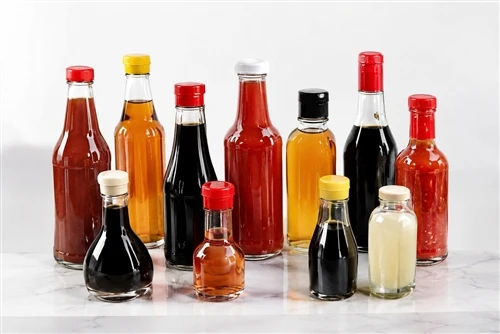
In the glass packaging industry, defects such as bubbles, impurities, and cracks tend to cause potential safety hazards and damage brand reputation. With "zero defective products" as its bottom line, Cheer Packaging follows international SGS standards and adopts a QC process combining "automatic inspection + full manual inspection" to eliminate defects at the source and set an industry benchmark.
I. Analysis of Common Defect Terms in the Packaging Industry (Defined by SGS Standards)
SGS defect standards serve as industry guidelines. Cheer clarifies the definitions, standards, and hazards of three core types of defects to provide a basis for quality control.
1. Seeds (Bubbles)
Refers to enclosed air cavities formed during product molding due to issues with raw materials, temperature, or the environment. SGS stipulates that a single product shall contain no more than 3 bubbles with a diameter ≥ 0.5 mm, and bubbles are strictly prohibited in critical areas such as the shoulder and mouth of bottles. Cheer has raised its control precision to 0.1 mm and avoids the causes of bubbles throughout the production process.
2. Bird Swing (Glass Filaments)
A fine impurity unique to glass packaging, defined by SGS as fibrous glass impurities with a diameter ≤ 0.1 mm and a length ≥ 1 mm. Such impurities are highly concealed and likely to trigger safety hazards. SGS requires qualified products to be free of such impurities, and Cheer completely eliminates them through high-precision inspection.
3. Checks (Cracks)
Refers to fine cracks with a length ≥ 0.3 mm and a width ≥ 0.05 mm, divided into visible and hidden cracks, which easily lead to packaging rupture and leakage. SGS stipulates that products exceeding this standard are deemed unqualified. Cheer strictly controls the molding and circulation processes to prevent hidden cracks from entering the market.
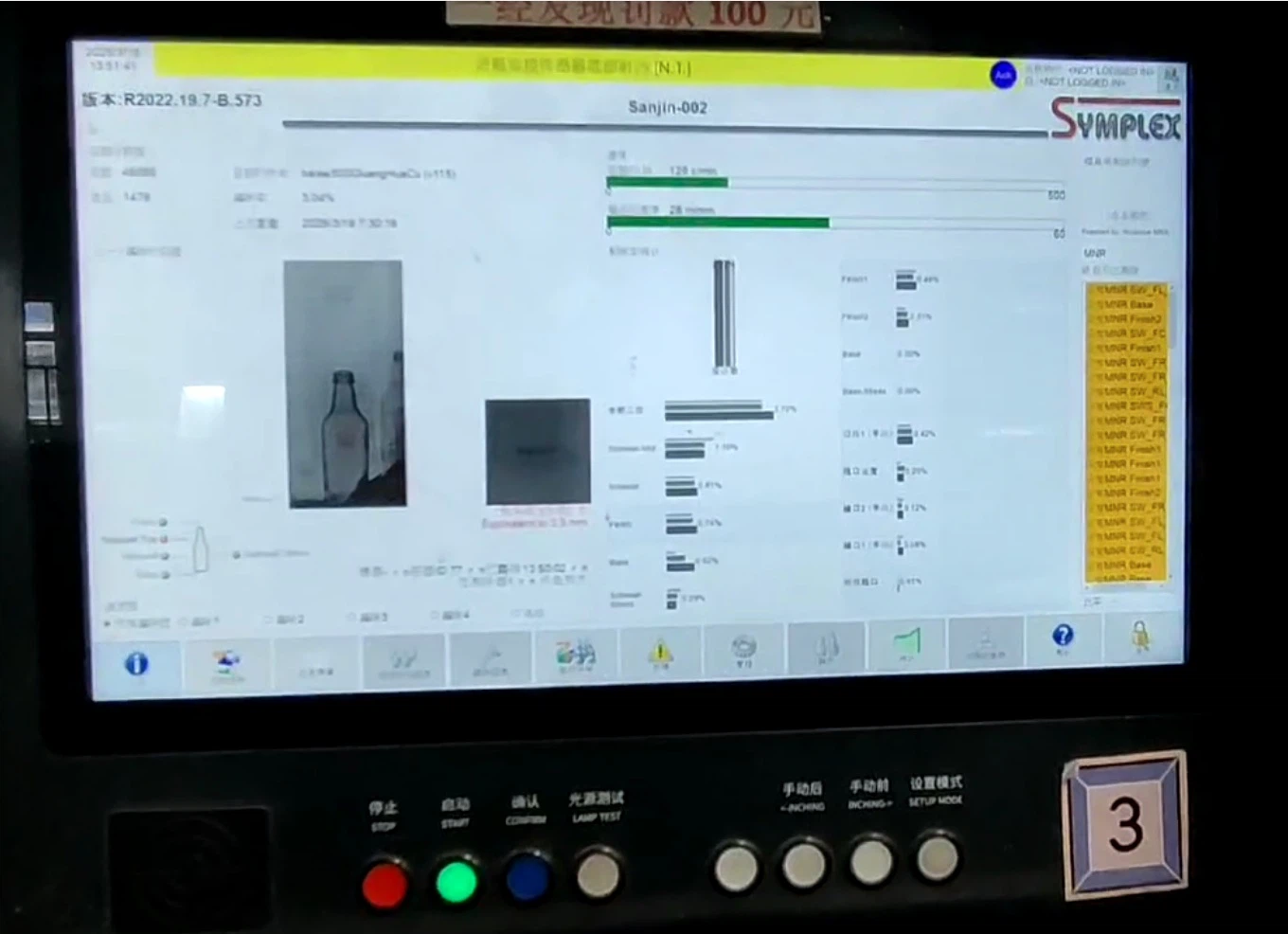
II. Cheer Packaging's QC Process: Dual Protection for the Implementation of SGS Standards
Cheer has established a dual QC process of "automatic inspection machines + full manual inspection" to achieve full-chain control and ensure products comply with SGS standards.
1. Pre-control: Avoiding Defects at the Source
Selects SGS-certified raw materials and conducts sampling inspection upon factory entry; adopts dust-free workshops and controls temperature and humidity to reduce the formation of bubbles, glass filaments, and cracks.
2. Mid-process Inspection: Precise Screening by Automatic Inspection Machines
Introduces multiple fully automatic inspection devices for 360° all-round inspection at a speed of 300 pieces per minute, capable of identifying 0.1 mm-level defects, automatically marking and rejecting unqualified products to match SGS inspection precision.
3. End Control: Full Manual Inspection as the Final Safeguard
Quality inspectors are certified and post-qualified through SGS-related training. They conduct full inspection using the "three-step visual inspection method" combined with a sampling review mechanism, forming a closed loop of "inspection-feedback-optimization" to uphold the quality bottom line.
4. Full-process Traceability: Digital Support for Standard Implementation
Retains inspection data of the entire process, regularly invites SGS for sampling verification, and integrates multiple quality system certifications to achieve full-chain traceability.
III. Industry Insights
Cheer's quality control model demonstrates that packaging enterprises must take international standards as the guidance and build a closed-loop system featuring "pre-prevention, mid-process inspection, end safeguard, and full-process traceability". Only in this way can they reject defective products, build a solid quality defense, and enhance core competitiveness.