Glass bottles, thanks to their stable material, recyclability, and strong barrier properties, have become a core packaging container in the food, beverage, cosmetics, and pharmaceutical industries. However, due to their high brittleness and poor impact resistance, reasonable pallet packaging solutions are required for bulk transportation to ensure product integrity, improve logistics efficiency, and reduce overall costs. The core of pallet packaging is to achieve "stable protection + convenient logistics," mainly composed of three core components: pallets, dividers, and outer fixing materials. The selection should be based on a comprehensive consideration of product characteristics, transportation distance, export requirements, and other practical needs.
I. Pallets: The Foundation of Support, Adaptable to Diverse Scenarios
Pallets are the core load-bearing component of pallet packaging, directly affecting stacking stability and transportation compatibility. There are three main types:
Fumigated Pallets: Made from solid wood, their high strength and load-bearing capacity make them suitable for heavy glass bottle packaging such as large-capacity infusion bottles and chemical reagent bottles. They require strict fumigation and certification for export, complying with the ISPM 15 international standard, but incur additional fumigation costs and time, and their heavier weight increases logistics costs.
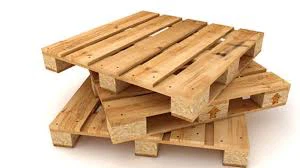
Non-Fumigated Pallets: Made from processed wood materials such as plywood and particleboard, they are disinfected through high temperature and high pressure during production and can be directly exported. They combine the load-bearing capacity and convenience of solid wood pallets and are the mainstream choice for export glass bottle packaging, only slightly less durable than solid wood pallets in extreme environments.
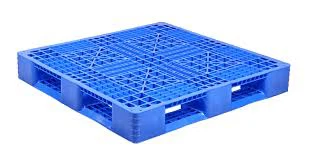
Plastic Pallets: Made from food-grade plastics such as PP and HDPE, they are waterproof, moisture-proof, corrosion-resistant, and recyclable. They are lightweight and easy to clean, suitable for humid environments, cold chain transportation, or scenarios with high hygiene requirements such as food and beverage bottles and pharmaceutical ampoules. They do not require quarantine and are universally applicable worldwide, with a long service life and reusability, but the initial purchase cost is higher than wooden pallets, and brittleness may increase at low temperatures.
II. Dividers: Layered Protection to Prevent Collision Damage
The core function of dividers is to separate the upper and lower layers of glass bottles, preventing friction and collision, while also improving stacking stability. There are two main types:
Cardboard hat: Custom-made from high-strength corrugated cardboard or kraft paper, they precisely fit the top of the bottle, providing both positioning and cushioning functions. Low cost, readily available materials, and recyclable and biodegradable, meeting environmental protection requirements. Suitable for most standard glass bottle sizes, but has poor water resistance and is prone to softening and deformation in humid environments, affecting its protective effect.
Plastic sheet: Made of plastics such as PE and PVC, they are waterproof, moisture-proof, impact-resistant, and reusable. The surface is designed with anti-slip patterns or positioning grooves to better secure the bottles. Suitable for cross-border transportation, fragile items such as thin-walled perfume bottles, or transportation scenarios with complex environments. The disadvantage is that the cost is higher than cardboard caps, and recycling requires adherence to plastic recycling regulations.
III. Outer layer fixing materials: Overall fastening to ensure stable stacking
Outer layer fixing materials are used to fasten the glass bottles, dividers, and pallets together as a whole, preventing displacement and tipping during transportation, and also providing dust and pollution protection. The two most widely used types are:
Shrink film: Made of heat-shrinkable materials such as POF and PE, it tightly conforms to the contour of the goods after being heated by a heat shrink machine. The packaging has a neat appearance and good sealing performance, effectively blocking dust and moisture. It has high packaging efficiency and is suitable for batch standardized glass bottle pallet packaging, but requires dedicated heat shrink equipment and has high requirements for packaging size compatibility.
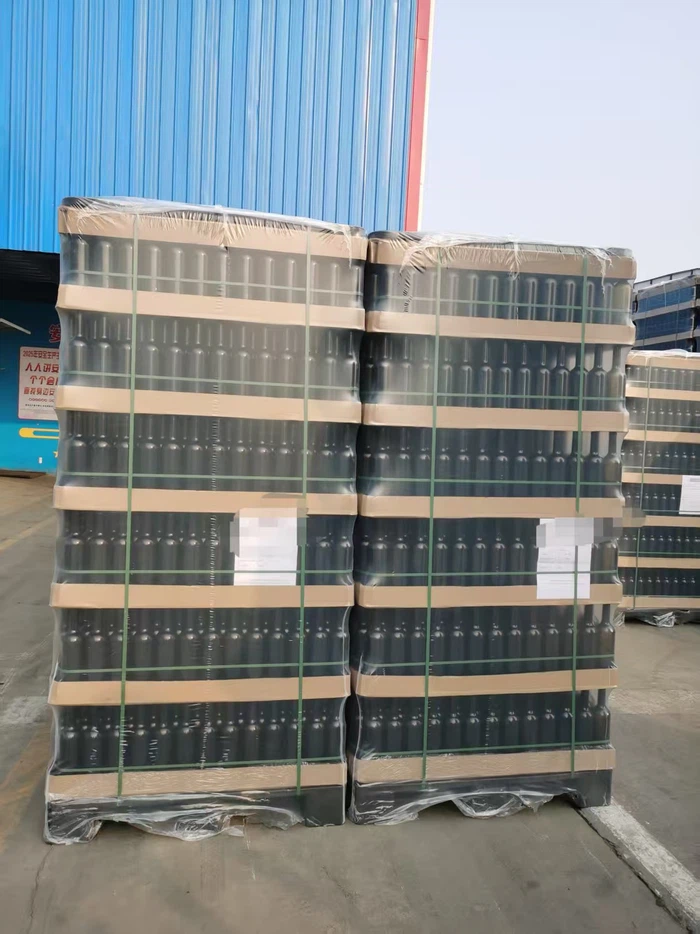
Stretch film: Mostly PE stretch wrap film, which can be wrapped manually or by a wrapping machine, using the tensile and retraction force of the film to fasten the goods. It does not require dedicated heating equipment, is flexible to operate, and adapts to different sizes and shapes of palletized goods. It has high tensile strength and puncture resistance, and can cope with complex transportation environments, but the packaging neatness is slightly inferior to shrink film, and manual operation has higher labor costs.