Soy sauce, vinegar, and edible oil require different packaging solutions. Vinegar contains acetic acid, soy sauce combines salt and organic acids, while edible oil needs protection from oxygen and UV light. Bottle selection should focus on chemical stability, closure compatibility, and transport durability.
Chemical Compatibility Requirements
| Product | Typical pH | Main Risk | Recommended Glass |
|---|---|---|---|
| Soy Sauce | 4.5–5.2 | Closure corrosion | Flint Glass |
| Vinegar | 2.4–3.4 | Acid exposure | Soda-Lime Glass |
| Edible Oil | Neutral | Oxidation | Amber Glass |
| Olive Oil | Neutral | UV degradation | Dark Green Glass |
Key specifications:
Thermal shock resistance ≥42°C
Internal pressure resistance ≥1.0 MPa
FDA food-contact compliant
ISO 9001:2015 manufacturing system
Glass Color Selection
| Glass Type | Application |
|---|---|
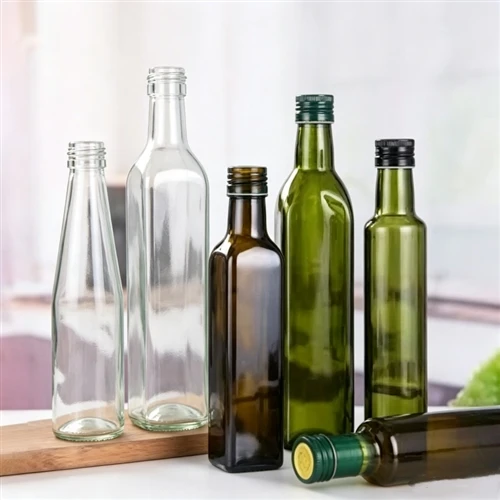
| Extra Flint | Premium condiments |
| Flint | Standard food products |
| Amber | Edible oil |
| Dark Green | Olive oil |

Closure Selection
| Finish Type | Application |
|---|---|
| Screw Cap | Soy Sauce |
| Pilfer-Proof | Vinegar |
| Pourer Finish | Edible Oil |
| ROPP Finish | Premium Products |
Recommended tests:
Torque testing
Leakage testing
Drop testing
72-hour inversion testing
Manufacturing Factors Affecting Performance
Annealing Lehr Control
Proper annealing reduces residual stress and improves transport durability.
Mold Tolerance Control
| Dimension | Typical Tolerance |
|---|---|
| Finish Diameter | ±0.20 mm |
| Height | ±1.00 mm |
| Capacity | ±3% |
Uniform wall thickness improves filling-line stability and reduces breakage.

Export Packaging
Recommended solutions:
Carton with dividers
Palletized packaging
Stretch wrapping
Corner protection
Typical inspections include:
| Inspection Item | Standard |
|---|---|
| Critical Defects | AQL 0 |
| Major Defects | AQL 1.5 |
| Minor Defects | AQL 2.5 |
Proper palletization reduces container movement and transportation damage.
Conclusion
For soy sauce and vinegar, food-grade soda-lime glass with corrosion-resistant closures is typically sufficient. For edible oils, amber or dark green glass provides additional UV protection. Buyers should evaluate bottle quality, closure compatibility, annealing quality, and pallet loading efficiency-not just unit price.
FAQ
-
Which glass color is best for edible oil?
Amber or dark green glass provides better UV protection and helps slow oxidation.
-
Can vinegar damage glass bottles?
No. Food-grade glass is highly resistant to acetic acid and suitable for long-term vinegar storage.
-
How can export breakage be reduced?
Use palletized packaging, proper annealing, and AQL 1.5/2.5 inspection standards before shipment.