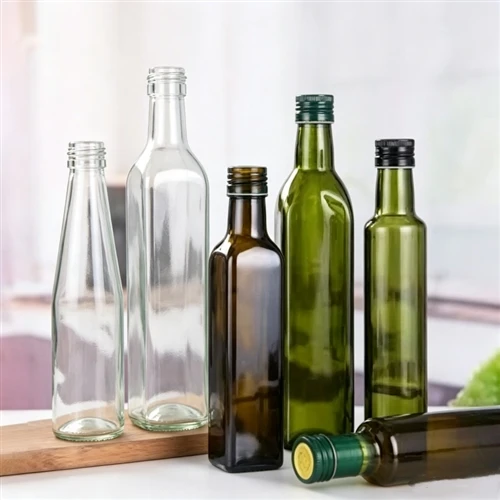
Modern narrow tolerance forming systems allow bottle weight reductions of 10–25% while maintaining mechanical properties required for export packaging and high-speed filling operations.
For beverage manufacturers, every gram removed from a bottle directly affects freight cost, pallet loading efficiency, and carbon emissions across the supply chain.
Why Bottle Weight Has Become a Supply Chain Variable
Glass weight influences:
- Ocean freight cost per container
- Pallet loading efficiency
- Carbon emissions per shipped unit
- Filling line handling performance
- Top load resistance during stacking
For export packaging, transportation often represents 25–40% of total packaging cost.
A 750 ml spirit bottle reduced from 650 g to 550 g can decrease glass consumption by approximately 15%.
Assuming 200,000 bottles:
- Glass reduction: 20 metric tons
- Lower container weight
- Reduced fuel consumption
- Higher pallet efficiency
| Bottle Capacity | Traditional Weight | Lightweight Version | Weight Reduction |
|---|---|---|---|
| 500 ml | 420 g | 350 g | 16.7% |
| 700 ml | 580 g | 490 g | 15.5% |
| 750 ml | 650 g | 550 g | 15.4% |
| 1000 ml | 780 g | 670 g | 14.1% |
Modern IS forming machines combined with optimized mold design allow these reductions without compromising bottle integrity.
Wall Thickness Distribution and Structural Engineering

Bottle weight reduction is not achieved by uniformly thinning all sections.
Engineering optimization focuses on:
Heel Section Control
The heel carries most vertical compression loads.
Typical requirements:
Heel thickness: 5.0–8.0 mm
Thickness deviation: ±0.3 mm
Shoulder Reinforcement
The shoulder experiences impact stress during conveying.
Recommended values:
- Radius transition optimized
- Local thickness increase
- Stress concentration reduction
Sidewall Optimization
Modern bottles target:
Wall thickness uniformity ≥ 85%
Ovality ≤ 0.8 mm
Verticality tolerance ≤ 1.5 mm
Finite element simulation is commonly used before mold manufacturing.
Annealing Control and Mechanical Strength Requirements
Weight reduction increases sensitivity to residual stress.
The annealing lehr becomes critical.
Recommended parameters:
- Annealing temperature: 540–580°C
- Cooling cycle: controlled gradient
- Residual stress level: below 8 nm/mm
Typical laboratory targets:
| Test Item | Standard Value |
|---|---|
| Internal pressure resistance | ≥ 1.4 MPa |
| Top load resistance | ≥ 350 kg |
| Thermal shock resistance | ≥ 42°C |
| Impact resistance | SGS tested |
| Annealing quality | Polariscopic inspection |
Production facilities commonly perform:
- Vertical load testing
- Pressure testing
- Thermal shock testing
- Side impact testing
Inspection levels frequently follow:
- AQL 1.5 critical defects
- AQL 2.5 major defects
- AQL 4.0 minor defects
Lightweight Bottles on High-Speed Filling Lines
Many buyers worry that lighter bottles increase line stoppages.
This problem usually results from poor dimensional control rather than reduced weight.
Critical dimensions include:
- Finish tolerance: ±0.20 mm
- Height tolerance: ±1.0 mm
- Body diameter tolerance: ±0.8 mm
- Neck concentricity: ≤0.5 mm
Compatible finish types include:
- Cork finish
- Guala finish
- Screw cap finish
For filling lines operating above 18,000 BPH, dimensional consistency becomes more important than bottle weight.
Manufacturers should verify:
- Cap application torque
- Label positioning
- Conveyor stability
- Filling nozzle alignment
Extra Flint Versus Standard Flint in Lightweight Designs

Material selection affects both appearance and performance.
| Property | Extra Flint | Standard Flint |
|---|---|---|
| Transparency | High | Medium |
| Iron content | Lower | Higher |
| Premium appearance | Yes | Limited |
| Suitable for spirits | Excellent | Good |
| Lightweight applications | Preferred | Acceptable |
Extra Flint glass improves shelf appearance while maintaining adequate mechanical properties.
For premium spirits, reduced bottle weight does not necessarily reduce perceived product value when bottle geometry remains balanced.
Export Packaging and Pallet Loading Efficiency
Packaging design strongly influences logistics cost.
Common export methods:
- Bulk pallet packaging
- Carton with dividers
- Tray and shrink film
- Full palletized packaging
Typical pallet performance:
| Packaging Type | Bottles per Pallet | Container Efficiency |
|---|---|---|
| Bulk pallet | High | Excellent |
| Carton packing | Medium | Good |
| Divider cartons | Lower | Moderate |
Recommended pallet standards:
- ISPM-15 treated pallets
- Stretch film protection
- Corner protectors
- Top sheet moisture barrier
Container loading optimization can increase shipment quantity by 5–10%.
Carbon Footprint Reduction
Lower bottle weight reduces:
- Raw material consumption
- Furnace energy usage
- Transportation emissions
- Packaging material demand
A reduction of 100 g per bottle may save several tons of glass annually for medium-volume beverage brands.
Many international buyers now request:
- Carbon footprint reports
- Packaging sustainability data
- Recycled glass content
- Supply chain emission calculations
Lightweight glass technology supports these requirements without replacing glass with alternative materials.
Production Requirements for Lightweight Glass Bottles
Successful projects usually require:
- Mold tolerance control
- Stable gob distribution
- Annealing optimization
- Automated inspection systems
- Statistical process control
Typical equipment includes:
- IS machines
- Cold end inspection
- Polariscopes
- Vertical load testers
- Internal pressure testers
Factories operating under ISO 9001:2015 systems generally achieve better dimensional consistency.
Frequently Asked Questions
Can lightweight bottles be used for premium spirits?
Yes. Many premium spirit brands use lightweight bottles while maintaining Extra Flint material and premium surface decoration.
What is the typical freight saving from lightweight bottles?
A 10–20% bottle weight reduction may reduce transportation costs by 5–15%, depending on shipment volume and destination.
Do lightweight bottles increase breakage rates?
Not necessarily. Breakage is primarily influenced by wall thickness distribution, annealing quality, mold precision, and pallet packaging design.