Selecting olive oil glass bottles is not only about aesthetics; packaging directly impacts shelf life, container loading efficiency, breakage loss and your total landed cost. Many importers overlook quantifiable parameters and end up with shorter oil shelf life or unexpected freight overspend. This guide brings real industry data to help packaging buyers and olive oil brands make data-backed decisions for bulk export orders.
Why Tinted Glass Protects Olive Oil (With Light Transmission Data)
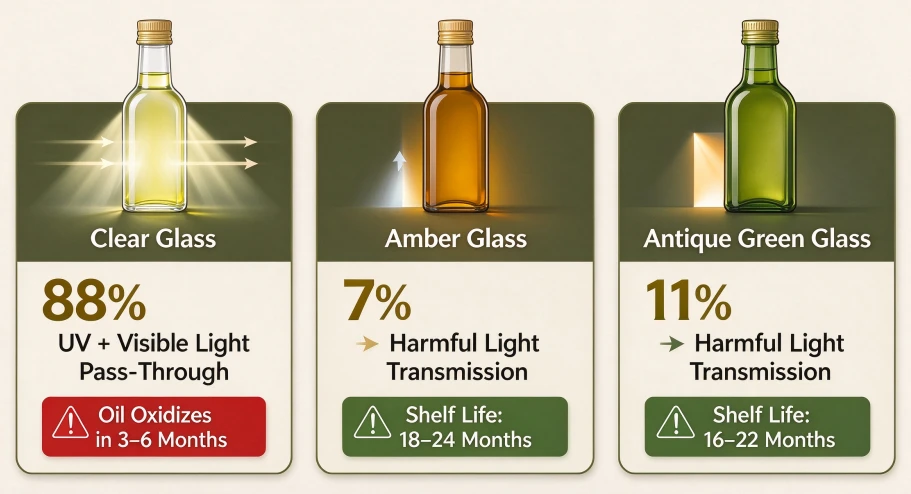
Extra virgin olive oil loses polyphenols and develops rancid flavour when exposed to light.
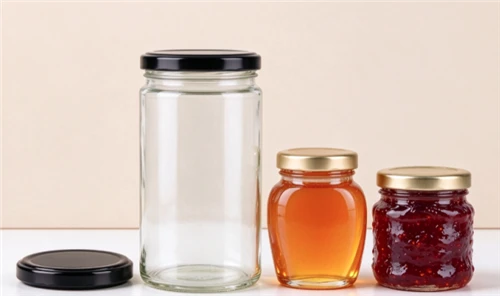
►Clear glass: 88% of UV + visible light passes through. Olive oil oxidises in 3–6 months under retail lighting.
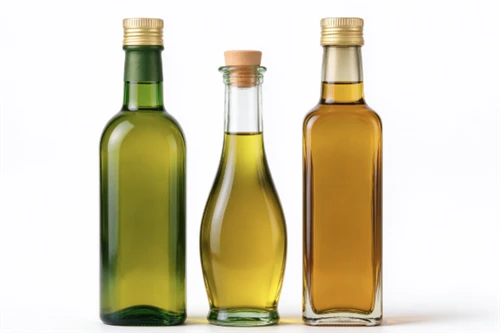
►Amber glass: only 7% harmful light transmission. Extends shelf life to 18–24 months.
►Antique green glass: 11% harmful light transmission. Shelf life reaches 16–22 months.
Glass is chemically inert and does not leach substances into oil even after 2 years of storage. 100% recyclable glass meets EU packaging recycling targets, where 76% of glass packaging is recycled across Europe. PET plastic containers can cut packaging weight by 40%, yet they cannot block UV rays and may absorb oil aroma over time.
Main Bottle Styles, Capacity, Weight & Pallet Loading Data
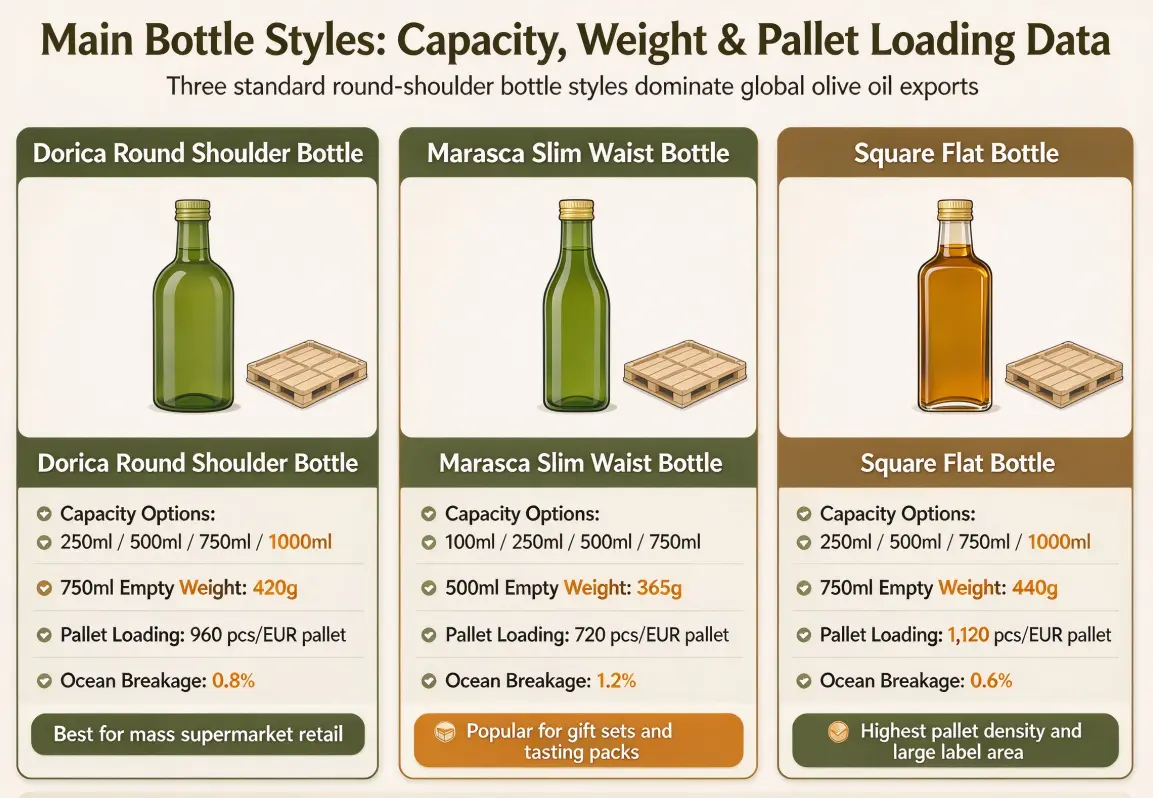
Three mainstream bottle types dominate global olive oil exports. Below are real specs for standard stock moulds.
►Dorica Round Shoulder Bottle Capacity options: 250ml / 500ml / 750ml / 1000ml
750ml antique green Dorica: bottle weight 420g
Pallet loading: 960 pcs per standard EUR pallet Best for mass supermarket retail. Stable round shoulder design keeps breakage under 0.8% for full ocean shipment.
►Marasca Slim Waist Bottle Capacity options:100ml /250ml /500ml /750ml
500ml green Marasca: bottle weight 365g
Pallet loading: 720 pcs per EUR pallet Elegant slim waist, popular for gift sets and tasting packs. Breakage rate around 1.2% due to narrow waist structure.
►Square Flat Bottle Capacity options:250ml /500ml /750ml /1000ml
750ml amber square bottle: bottle weight 440g
Pallet loading: 1120 pcs per EUR pallet Highest pallet density. Flat side offers large label space. Ocean breakage rate approx 0.6%.
Mini 100ml green sample bottles: 135g each, 2800 pcs per pallet, widely used for tasting kits and hotel amenities.
Custom Packaging: MOQ, Lead Time & Cost Reference
Two customisation paths: stock mould vs private mould.
1.Stock mould customisation (printing / coating / label)
MOQ: 10,000 pcs minimum
Production lead time: 18–28 days
No mould fee. Silk-screen printing cost: $0.03–0.07 per bottle (1–2 colours) Best for new brands running market tests with limited budget.
2.Private mould customisation (unique bottle contour, embossed logo)
MOQ: 100,000 pcs minimum
Lead time: mould making 30–45 days + mass production 25–35 days
Mould cost: $2,800–$6,500 per set, depends on complexity Private mould prevents copycat packaging and raises brand differentiation. Suitable for brands with annual order volume above 500,000 bottles.
Caps & Closures: Specs & Functional Comparison
1.Pourer tamper-evident screw cap (Retail standard) Fit most 750ml olive oil bottles. Tamper ring breaks once opened. 98% of EU supermarket olive oil brands adopt this closure.
2.Natural cork / synthetic cork (Premium gift packaging) Natural cork leakage risk ~2–3% if sealing not done properly. Synthetic cork reduces leakage down to 0.5%. Often paired with capsule or wax sealing.

Export Compliance & Logistics Cost Breakdown
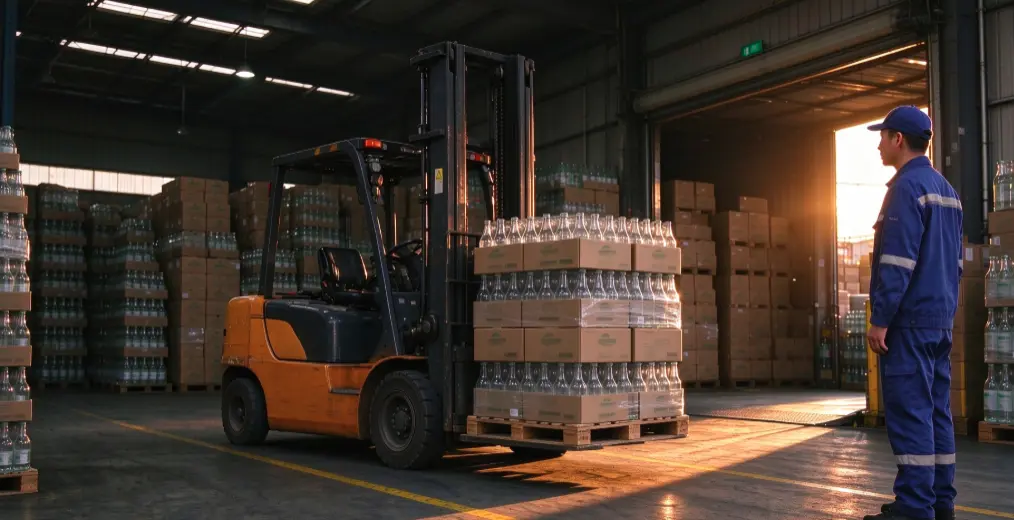
Glass weight normally accounts for 32–42% of total gross weight of packed olive oil cargo, which heavily drives sea freight cost. When comparing quotations, always calculate landed cost: Landed Cost = Bottle unit price + cap cost + inland charge + ocean freight + insurance + import duty + port handling
Food contact compliance: For EU market, glass must meet Regulation (EU) No 10/2011. For USA market, glass and coating need FDA food contact certification.
How to Vet Your Glass Bottle Supplier: Data Checklist
Ask suppliers for these quantifiable KPIs before confirming trial orders:
1.MOQ for stock / private mould, and exact production lead time
2.Light transmission test report for coloured glass
3.Historical ocean breakage rate data and compensation policy
4.Food contact test certificates (FDA / EU 10/2011)
5.Max printing colour count and unit printing cost
6.Pallet quantity per EUR / US pallet

FAQ
Q1: Which glass colour delivers the longest shelf life for olive oil? A: Amber glass, with only 7% harmful light penetration. It can maintain olive oil quality for up to 24 months. Antique green is the second-best choice. Clear glass is only acceptable for short shelf-life products sold away from direct light.
Q2: What is the typical breakage rate for sea shipment? A: Properly packed bottles: 0.6%–1.2%. Poor packaging can push breakage above 3%. Reliable suppliers will cover damaged goods beyond agreed threshold.
Q3: How much weight does glass add to finished goods? A: For 750ml olive oil bottle, empty bottle ~420g, oil net weight 700g. Glass accounts for ~37% of total gross weight. This directly affects ocean freight expenses.