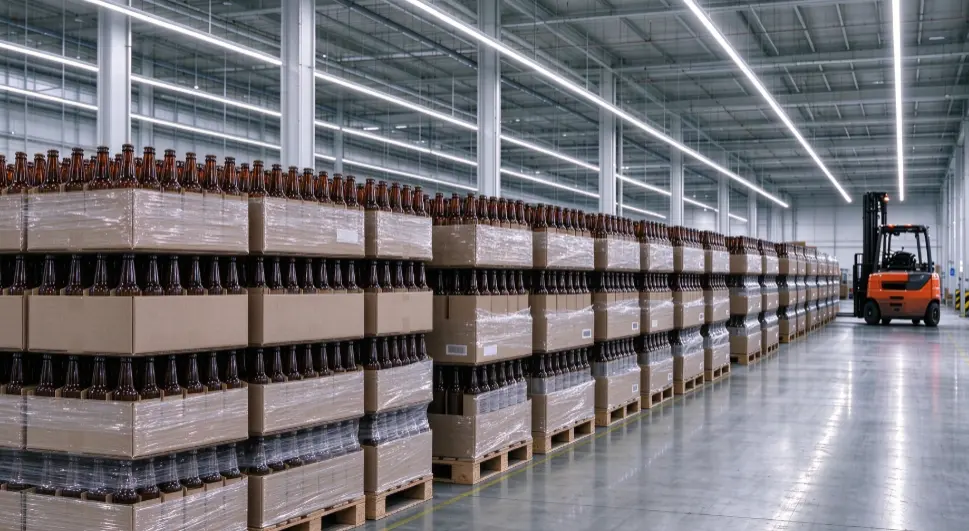
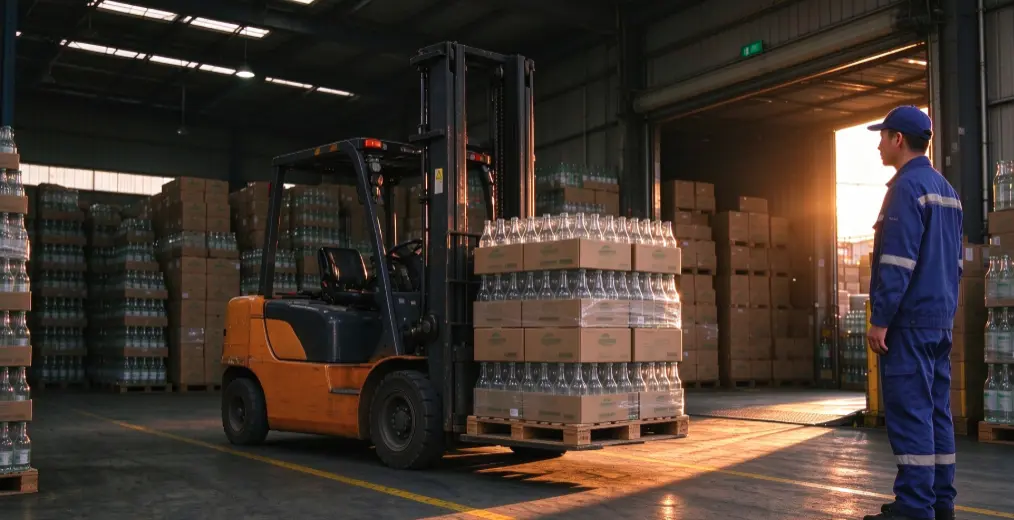
In the glass packaging industry, glass bottles are classified as fragile bulk commodities. Whether for finished product storage in factories, container sea transportation, or warehouse receiving and management for importers, standardized and scientific storage management plays a decisive role in maintaining product integrity and ensuring smooth subsequent filling and processing. Many buyers and suppliers focus heavily on production quality, packaging details, and shipping arrangements while ignoring professional warehouse storage specifications. This often leads to common problems such as damp and deformed cartons, moldy packaging, bottle chipping, and even thermal or cold cracking of glass bodies, resulting in unnecessary economic losses and customer complaints. Therefore, the storage of large quantities of glass bottles requires systematic management covering packaging selection, warehouse environment control, stacking standards, and daily maintenance.
Before mass production and container loading, packaging solutions should be confirmed in advance according to the customer's local warehouse conditions, labor costs, and storage capacity. At present, there are two mainstream packaging and transportation modes for bulk glass bottle export. The first one is pallet combined packaging, in which well-packed cartons of glass bottles are neatly stacked on standard wooden or plywood pallets and wrapped with stretch film for fixation, dust prevention, and collision avoidance. The second mode is carton-only packaging without pallets, which is widely adopted in regions with low labor costs.
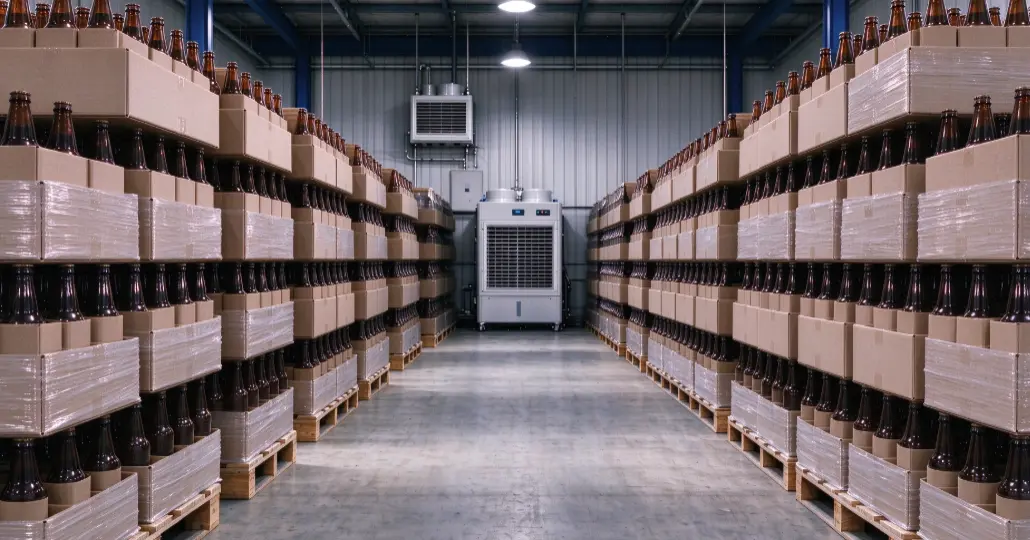
Pallet packaging is the most common and standardized solution for modern warehouse management worldwide. During early order communication, suppliers must confirm the appropriate stacking height with customers. The overall stacking height of conventional pallets is generally controlled within 1.5 meters. This standard is not fixed and will be adjusted according to the bottle height, single-cartoon loading quantity, and carton thickness. The stacking height directly affects warehouse space utilization and daily picking efficiency.
Relatively low pallet stacking brings higher operational convenience. It allows forklifts to operate flexibly, facilitates manual inspection, counting, and batch picking, and greatly reduces the risk of stack collapse during daily handling. However, low stacking occupies more floor space, which may cause pressure on warehouses with limited storage area and increase overall warehousing costs. In contrast, higher pallet stacking can effectively utilize vertical warehouse space, improve space utilization, and reduce unit storage expenses. Nevertheless, high stacking puts forward higher requirements for carton compression resistance, pallet stability, and forklift operation proficiency, which is more suitable for standardized and mechanized large-scale warehouses.
In some overseas regions with abundant labor resources and low labor costs, many importers prefer non-pallet carton packaging. By filling the container completely with cartons without pallet gaps, the container loading rate can be maximized, making full use of every inch of container space. This method significantly reduces the average transportation cost per glass bottle and improves overall shipping economy. However, it also has obvious disadvantages. All unloading and stacking work relies entirely on manual labor, which consumes a large amount of working time and reduces delivery efficiency. Meanwhile, without pallet integral support, cartons are more likely to be squeezed and collided during handling, increasing the risk of glass bottle breakage.
Regardless of the packaging method adopted for shipment, bulk glass bottles must be stored in strict accordance with professional warehouse standards after arriving at the destination warehouse. Although glass bottles appear hard and durable, they are extremely sensitive to ground conditions, light, humidity, temperature changes, and stacking methods. Improper storage will not only damage packaging appearance but also cause invisible bottle defects and even potential safety hazards.

First, the warehouse storage ground must be kept flat, solid, and dry. Uneven ground will cause uneven force on the stacked cartons, leading to tilting, dislocation, or overall collapse of the pallet stack, resulting in large-area breakage of glass bottles. If the ground is humid or stagnant with water, the bottom of the corrugated cartons will absorb moisture and soften rapidly, losing structural support capacity. This will seriously affect the stability of the entire stack and bring hidden dangers to warehouse safety.
Second, direct sunlight must be completely avoided in the storage area. Many warehouse managers underestimate the risks of sunlight exposure for glass products. In fact, under specific light angles and strong sunlight conditions, glass bottles will produce a light refraction and focusing effect. The focused high-intensity light can easily ignite surrounding combustible materials such as cartons, plastic films, and packaging debris, which may trigger fire accidents. All glass bottle stacks should be placed away from windows, skylights, and strong light irradiation areas.
Third, strictly control warehouse humidity and avoid humid storage environments. Glass bodies themselves are waterproof and moisture-proof, but the outer carton packaging is extremely hygroscopic. During long-distance sea transportation, containers inevitably contain moisture. If the goods are stored in a humid warehouse for a long time, the cartons will absorb water, bulge, deform, and grow mold spots. Damp and moldy cartons will lose compression resistance, resulting in unstable stacking. At the same time, mold and moisture stains will adhere to the bottle surface and bottle mouth, increasing the cleaning difficulty before customer filling and affecting product cleanliness. For coastal warehouses or rainy seasons, it is necessary to equip dehumidification equipment to maintain stable and dry indoor humidity.
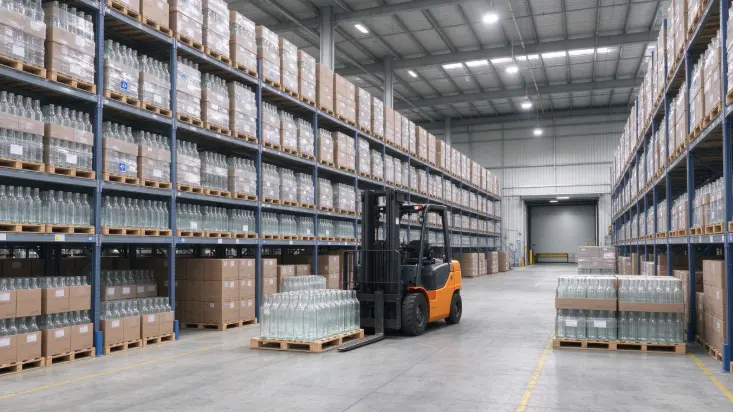
Fourth, maintain a constant room temperature in the warehouse and avoid extreme temperature differences. Glass bottles are only suitable for long-term storage at normal temperature. Excessively low temperature or high temperature environment will cause potential structural changes inside the glass. When the stored bottles are taken out for cleaning, rinsing, and liquid filling, the sharp temperature difference will lead to rapid expansion or contraction of the glass structure, resulting in bottle cracking, bursting, and liquid leakage. Therefore, glass bottle products should be kept away from high-temperature equipment, refrigeration equipment, and ventilation ports with drastic temperature changes.
Fifth, implement standardized and safe stacking specifications. All cartons must be stacked neatly and vertically with uniform stress on four corners. Overlapping, dislocation, overhanging, and irregular stacking are strictly prohibited. It is forbidden to place any heavy goods on the glass bottle cartons. Extrusion pressure will cause invisible micro-cracks on the glass bottles, which cannot be detected during warehouse inspection but will cause leakage and scrapping during customer filling production, bringing huge economic losses to both suppliers and buyers.
Sixth, insist on regular warehouse cleaning and daily maintenance. The storage area should be cleaned regularly to remove dust, gravel, broken glass residues, and waste packaging materials on the ground. Residual sundries may puncture cartons or cause forklift jitter and stack instability during handling. Keeping the warehouse clean and tidy can effectively ensure the surface cleanliness of glass bottles, avoid impurity contamination, and guarantee product qualification rate for downstream filling and packaging production.
To sum up, the storage of large quantities of glass bottles is a systematic and standardized management work, not a simple stacking operation. Reasonable packaging selection, scientific warehouse environment control, standardized stacking operations, and daily refined management can effectively avoid common problems such as breakage, mold, deformation, and safety risks. Strict warehouse storage standards ensure that all glass bottle products can be delivered to production in complete, clean, and qualified condition, helping customers achieve stable and efficient production operations.