Market Overview
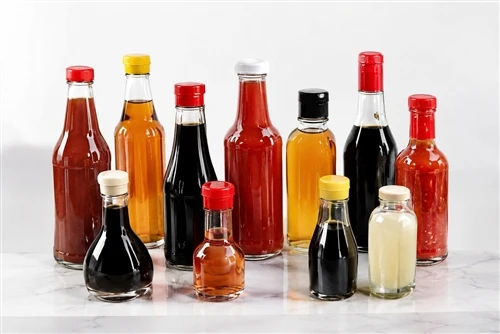
Market Size: The market size of glass bottles for condiments in China is expected to be RMB 9.5 billion in 2025 and will grow to RMB 13 billion in 2030, with an average annual growth rate of about 6.5%.
Growth Trend: With the continued expansion of the food and beverage industry, the increasing demand of consumers for healthy and environmentally friendly packaging, and the support of policies for green packaging, the market size of glass condiment bottles is expected to continue to grow.
Material Characteristics
Advantages: Glass is transparent and beautiful, easy to clean, non-toxic and harmless, and will not affect the taste of food. At the same time, glass jars have good sealing and moisture resistance, which can effectively prevent condiments from getting damp and agglomerating, and extend the shelf life. In addition, the structure of glass is stable, resistant to high temperatures, not easy to deform, and will not react chemically or physically with any condiments.
Disadvantages: Glass condiment bottles are brittle and easy to break, so they need to be handled with care.

Production Process
Raw Material Selection: Common glass materials include soda-lime glass, low borosilicate glass, neutral borosilicate glass, etc. Soda-lime glass has low cost and average performance; neutral borosilicate glass has stable chemical properties, is resistant to water, acid and alkali, has strong resistance to cold and heat shock, secondary processing performance and high mechanical strength, and is a relatively high-quality packaging material.
Production process: usually includes steps such as raw material mixing, melting, clarification, homogenization, and molding. The molding process includes blowing and pressing, and the glass liquid is made into the required bottle shape through a mold. There may be annealing treatment afterwards to eliminate the stress inside the glass and improve the strength and stability of the product. Some glass spice bottles will also undergo surface treatment processes such as printing and frosting to improve their aesthetics.
Industry standards
Physical and chemical properties: It stipulates indicators such as lead and cadmium migration, thermal shock resistance, mechanical shock resistance, inner surface water resistance, and internal stress to ensure the safety and stability of glass spice bottles during use.
Specifications and dimensions: corresponding regulations are made for capacity, bottle height, vertical axis deviation, bottle outer diameter, non-roundness of round bottle body, bottle mouth size, bottle body thickness, bottle bottom thickness, thickness ratio of the same bottle body, thickness ratio of the same bottle bottom, and non-parallelism of the mouth, so as to ensure the filling and use requirements and product consistency.
Appearance quality: strictly control the appearance of serious defects such as cracks, broken bubbles and surface bubbles, bottle mouth defects, inner wall defects, and there are also relevant regulations for bubbles, stones, seams, etc.
Development trend
Functionalization: The condiment field tends to be functionally subdivided, and the market size of special glass bottles such as moisture-proof and anti-oxidation will continue to expand. For example, glass condiment bottles with special sealing devices or oxygen-isolating designs can better maintain the freshness and quality of condiments.
High-end and personalized: Consumers' requirements for product quality and appearance design are constantly increasing, and the high-end glass condiment bottle market will usher in rapid growth. The market share of customized bottle types is gradually increasing, and companies will pay more attention to product design and innovation to meet the personalized needs of consumers.