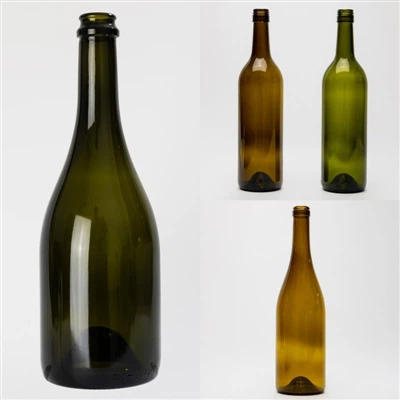
The champagne bottle pressure test is mainly carried out in accordance with relevant standards such as GB/T 4546-2008 "Glass Container Internal Pressure Test Method". The specific steps are as follows:

Preparation stage: Place the champagne bottle sample to be tested into the test machine to ensure that the champagne bottle is correctly connected to the test machine. Set the test parameters, including the preset pressure value, pressurization rate, and pressure holding time.
Pressurization stage: Start the test machine, and the servo motor drives the hydraulic pump to start generating pressure. The pressure is transmitted to the pressure sensor and the tested champagne bottle in an equal value through the pipeline. The equipment controller collects the signal of the pressure sensor in real time, and accurately controls the servo motor and hydraulic pump according to the signal value to ensure that the pressure in the system increases linearly at the preset rate. The initial pressurization rate is usually 1.0MPa/s±0.2MPa/s until the preset pressure value is reached.

Pressure holding stage: When the pressure reaches the preset value, the test machine enters the pressure holding stage and keeps the pressure constant for a period of time, usually 60 seconds ±2 seconds. During this process, observe whether the tested champagne bottle is broken or leaking.
Pressure relief and result determination: After the pressure holding stage, the test machine automatically performs pressure relief. Observe whether the tested champagne bottle remains intact after the pressure relief. If the champagne bottle is broken or leaking, it is judged as unqualified; if the champagne bottle remains intact, it is judged as qualified.
In terms of test accuracy and range, the champagne bottle internal pressure tester usually has higher accuracy and a wider test range. For example, the maximum testable pressure is 6.00MPa, and the test accuracy can reach 0.001MPa.
In addition, the "secondary fermentation and bubbling" of champagne during the brewing process will produce the required air pressure. The pressure in most bottles is about 6bar. The industry generally believes that this is a standard parameter, and relevant regulations stipulate that the pressure in the champagne bottle is greater than 4bar.