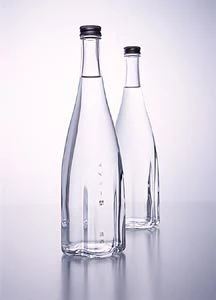
Champagne originated in France and got its name from the place. Champagne was originally a province in the northeast of Paris, France. According to legend, in 1760, the monk Berillon of the Hautville Monastery in Champagne Province added sugar to the wine, placed it in a glass bottle, firmly stoppered, and preserved it. A few months later, he remembered the wine he had saved. When he opened the cork, the wine in the bottle was filled with the smell of carbon dioxide and had a strong aroma, which was very different from the wine he had previously saved. The earliest Champagne was thus born. The secret to preserving wine by adding sugar to the bottle is that the wine undergoes secondary fermentation in the bottle. Champagne is actually a wine that has been fermented twice. The second fermentation is very important for brewing high-quality Champagne. In order to brew high-quality Champagne, the traditional bottle fermentation method, called "Champagne method", is still used in France, the hometown of Champagne. Add granulated sugar solution and artificial yeast into the "basic wine" stored at low temperature for more than two years, and then put the mixed raw materials of wine, sugar and yeast into champagne bottles bottle by bottle. The sealed champagne bottle is placed in the cellar, head and tail alternately, horizontally. Maintain a constant temperature of 12 to 14 degrees Celsius in the cellar for slow low-temperature fermentation. After about 80 days, a large amount of carbon dioxide is generated in the bottle, with six atmospheric pressures per square centimeter. The foaming process of Champagne is completed. Fermented Champagne will be stored in the storage room for two years or more to allow the carbon dioxide in the bottle to slowly and completely dissolve in the wine. The fully fermented Champagne was moved to a special wooden frame on the ground, which was angled at 60 degrees, with the bottom of the bottle facing up and the mouth of the bottle inclined downward. The bottle was rotated and cracked once a day for more than a month, so that the sediment in the bottle slowly gathered at the cork. Then put the precipitated bottle into a cold water tank with a temperature of 5 degrees Celsius to cool down. In this way, a bottle of high-quality Champagne can take four to five years to brew.