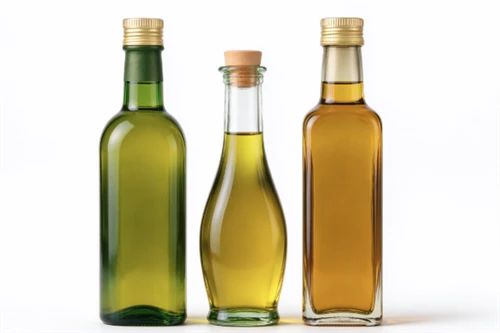
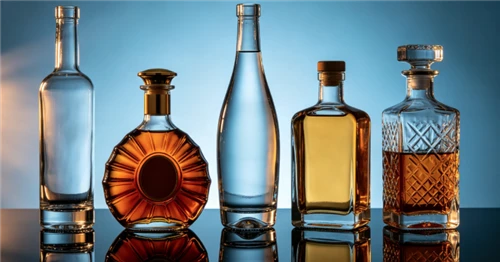
Although, when appreciating wine, it does not necessarily require you to have rich knowledge of wine bottles. But it cannot be denied that wine bottles are indeed very important for wine. Before the emergence of glass wine bottles, people stored wine in clay jars or animal fur bags, which did not last long and were also difficult to transport. Later, the emergence of glass wine bottles and oak stoppers gave wine a new spring. Good quality wine can be stored for many years and can also be sold around the world.
So what are the sizes of glass wine bottles used now? In fact, in addition to the traditional 750ml, 375ml (commonly used for sweet wines), and the more familiar large bottle (1.5-liter), there are also many larger capacity super large wine bottles. Many of these wine bottles are named after the king mentioned in the Bible (the reason for this is currently unclear). What's even more confusing is that in different regions of France, the same name may indicate different sizes. The following table shows some common large-sizes and their names in the Bordeaux and Burgundy/Champagne regions of France.
In European countries outside of France and in the New World, large capacity bottles, especially 1.5-liter bottles, are also used. In terms of nomenclature, they often use the Burgundy region's nomenclature. The name Bordeaux seems to be limited to that region. In general, large capacity wines are highly favored by Bordeaux wine collectors, especially the 6.0-liter Imperial wine equivalent to 8 standard bottles. This is because compared to small-sized bottle shapes, large-sized wine bottles have a smaller ratio of air content to wine content, which can slow down the development of flavor.
In addition to the sizes listed in the table above, there are other sizes of wine bottles available, but they do not have a separate name. The most common one is the 500ml bottle, which is mostly used for sweet wines such as Port and Tokay that are suitable for drinking when young; In addition, there is a 620ml bottle of wine, which is mostly used for Vin Jaune produced in the Jura region of France.