1. Global Standard Liquor Bottle Sizes & Physical Specifications
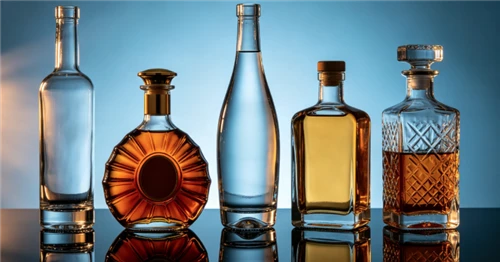
All data below refers to mass-produced regular glass liquor bottles for spirits, with unified height, diameter, weight and closure parameters applied in global packaging factories. Each size corresponds to fixed application scenarios and regional market access rules.
50ml (Miniature / Nip)
Physical parameters: 85–92mm height, 32–36mm diameter, 90–110g bottle weight
Main applications: airline catering, hotel minibar, product sampling, gift set accessories
Market feature: no mandatory capacity limit in most regions, used for low-volume trial sales
200ml (Half-Pint)
Physical parameters: 145–155mm height, 50–55mm diameter, 180–210g bottle weight
Main applications: retail single serving, travel retail, casual drinking scenarios
Market feature: widely accepted in Southeast Asia and European convenience stores
375ml (Half-bottle)
Physical parameters: 200–210mm height, 60–65mm diameter, 280–320g bottle weight
Main applications: craft spirits, small-batch production, family daily drinking
Market restriction: not approved for formal spirits retail in EU mainstream markets
700ml (EU Standard)
Physical parameters: 260–331mm height, 70–90mm diameter, 650–680g bottle weight, 18.5mm inner neck bore
Compliance rule: unified mandatory standard for spirits in EU, UK and most Oceania markets
Logistics data: 14,560 pieces per 20GP full container load, stable pallet stacking efficiency
750ml (US Fifth Standard)
Physical parameters: 298–305mm height, 70–73mm diameter, 660–690g bottle weight
Compliance rule: core specification for North American liquor retail, updated and recognized by US TTB 2025 new fill standards
Market share: occupies over 85% of regular spirits packaging in the US and Canadian markets
1000ml (1L Large Format)
Physical parameters: 320–340mm height, 85–92mm diameter, 800–850g bottle weight
Main applications: bar catering, duty-free wholesale, bulk commercial sales
Cost feature: lowest unit glass material cost per milliliter of liquor

2. Regional Regulatory Standards & 2025 Updated Rules
Liquor bottle capacity specifications fall under mandatory food packaging supervision, with clear differentiated rules across regions. Non-compliant containers cannot obtain market access qualifications.
European Union & UK: 700ml is the exclusive standard capacity for formal retail spirits. Authorized optional sizes include 50ml, 100ml, 200ml, 500ml, 1L, 1.5L and 2L. 375ml containers are excluded from official spirits packaging certification to unify market specification standards.
United States (TTB 2025 Updated Regulation): The official fill standard list expands from 10 to 15 valid specifications. Approved liquor bottle sizes cover 187ml to 3.75L, including newly added 355ml, 500ml and 700ml specifications, adapting to cross-border imported packaging demands. 750ml remains the dominant retail standard for domestic spirits.
Asia-Pacific Markets: Most Southeast Asian countries adopt EU 700ml standards. Japan implements exclusive 720ml fixed specifications for sake and local spirits. China follows metric standard with 500ml and 700ml as mainstream liquor packaging capacities.

3. Core Influencing Factors for Bottle Size Selection
3.1 Market Compliance & Certification Pass Rate
Capacity mismatch is the primary cause of customs clearance failure and shelf sales prohibition. Data shows that over 60% of cross-border liquor packaging rejection cases stem from non-compliant bottle capacity specifications. Exporters must match bottle sizes according to target market regulatory lists before mass production.
3.2 Consumer Sales Scenarios & Market Demand
Mini 50ml bottles support brand promotion and trial sales, with a repurchase rate of 18–22% in duty-free and hotel channels. 700ml and 750ml medium-sized bottles adapt to family gatherings and daily retail, contributing 78% of global spirits retail sales volume. 1L large-size bottles apply to catering and bulk wholesale, with a 30–35% lower unit sales cost than medium-sized products.
3.3 Production & Processing Efficiency
Standard-size bottles use mature universal molds, with mold opening costs 70% lower than customized special-shaped bottles. The filling efficiency of standard 700ml/750ml bottles on automated production lines reaches 12,000–15,000 bottles per hour, 40% higher than non-standard special-size containers. Standard wall thickness (2.8–3.2mm) ensures stable filling pressure and reduces breakage rate to below 0.3%.
3.4 Cross-border Logistics & Container Utilization
Uniform bottle height and diameter improve pallet and container loading rate. Standard 700ml liquor bottles achieve 92% space utilization in 20GP containers, while irregular non-standard bottles reduce utilization to 75% or lower, generating additional sea freight costs. Fixed-size carton packaging also lowers manual sorting and packing time by 35%.

4. Practical Design Specifications & Production Considerations
4.1 Neck Finish & Closure Matching
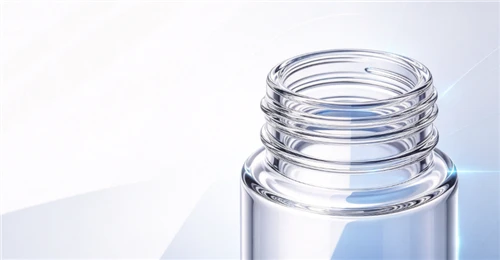
Two mainstream neck specifications apply to global liquor bottles: cork finish and screw thread finish. Conventional cork neck inner diameter is 18.5mm, matching natural cork and synthetic cork seals. Screw thread necks adopt 28mm outer diameter standard thread, suitable for aluminum anti-theft caps. Neck structure cannot be modified after mold completion, requiring confirmation before production.
4.2 Head Space & Temperature Adaptation
All liquor bottles reserve 8–12mm head space from liquid level to bottle mouth. This gap offsets liquid thermal expansion during long-distance transportation with temperature fluctuations of -10℃ to 55℃, effectively preventing bottle cracking and liquid leakage.
4.3 Glass Color & Product Protection Performance
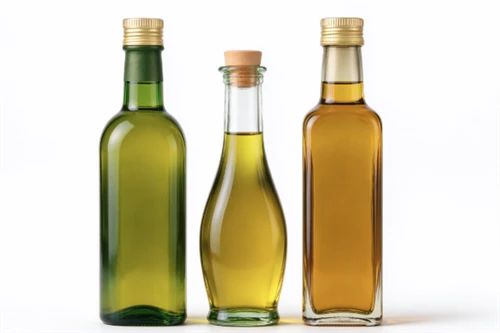
Dark green and amber glass blocks 90% of ultraviolet light, avoiding flavor deterioration of whiskey, brandy and red wine during storage and transportation. Transparent clear glass fits vodka, gin and other light-colored spirits with stable ingredients. Glass color selection directly affects the 12-month shelf stability of bottled liquor.
4.4 Label Area & Appearance Matching
Standard medium-sized bottles retain 120–150mm flat label area on the bottle body, meeting the printing demands of brand logos, ingredient lists, origin marks and tax labels. Excessively curved bottle bodies reduce label pasting accuracy and affect commodity shelf display uniformity.

5. Conclusion
Liquor bottle size selection connects regulatory compliance, production efficiency, logistics cost and market sales. Standardized bottle specifications ensure smooth cross-border customs clearance, stable production output and reasonable transportation cost control. Brand owners and packaging suppliers need to confirm target market access rules first, then match bottle dimensions, neck types and structural parameters, so as to achieve balanced effects in qualification compliance, cost control and market adaptation.
About Cheer Packaging
Xiamen Cheer Packaging Co., Ltd. specializes in custom glass bottle manufacturing for liquor, beverage, juice and food industries. Backed by in‑house mold development, automated production capacity and extensive cross‑border export experience, we help distilleries and global brands select and develop liquor bottles compliant with regional regulatory standards. Our solutions cover dimension verification, production efficiency optimization and logistics‑friendly packaging design to meet diverse market‑access requirements worldwide.
SEO Keywords
liquor bottle sizes, standard spirit bottle, 700ml liquor bottle, 750ml liquor bottle, empty glass liquor bottle, spirits packaging, custom liquor bottle design, liquor bottle dimension specification, spirits bottle closure type, glass bottle logistics parameter