The raw materials and chemical composition of the glass batch for bottles and cans are generally composed of 7-12 types of raw materials. Mainly including quartz sand, soda ash, limestone, dolomite, feldspar, borax, lead and barium compounds, etc. In addition, there are auxiliary materials such as clarifiers, colorants, decolorizers, and opacifiers (see glass manufacturing). Coarse quartz particles are difficult to melt completely; Fine particles can easily produce scum and dust during the melting process, affecting melting and easily blocking the furnace's heat storage chamber. The suitable particle size is 0.25-0.5mm. To utilize waste glass, broken glass is usually added, with a dosage of 20-60% and a maximum of 90%.
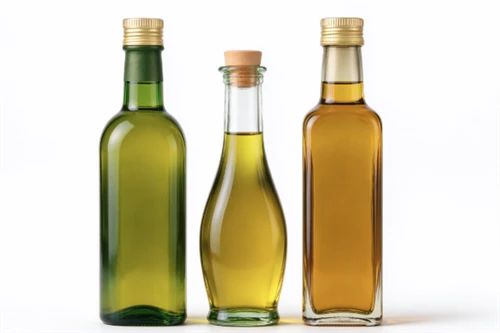
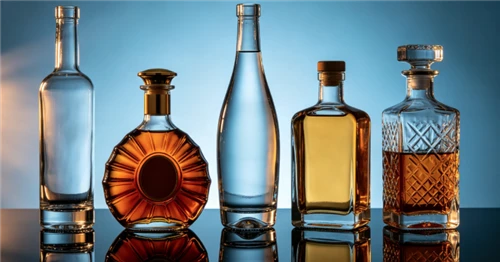
The chemical composition of glass bottles and jars varies according to their usage requirements, molding methods, molding speed, process characteristics, and raw material varieties. The vast majority of bottles and jars use sodium calcium silicate glass. The main components of sodium calcium silicate glass are SiO2, Na2O, and CaO. Introducing an appropriate amount of Al2O3 and MgO can reduce the crystallization tendency of glass, enhance its chemical stability and mechanical strength, and improve its formability. The chemical composition of sodium calcium bottle glass in most countries around the world is: SiO270~74%, CaO and MgO 10~14%, Na2O and K2O13~16%, and Al2O3 1.5~2.5%. When manufacturing colorless glass bottles and jars, the content of Fe2O3 in quartz sand is very low (usually around 0.03%). In ordinary sodium calcium glass, adding Cr2O3 and Fe2O3 results in a emerald green color of the glass, while adding sulfur carbon or MnO2 and Fe2O3 results in a brown color of the glass. Bottles and jars containing drugs are required to have high chemical stability and are made of borosilicate glass. Advanced cosmetic bottles are commonly made of crystalline glass containing lead, barium, or zinc, some of which are opaque glass, and fluoride is generally used as an opacifier.