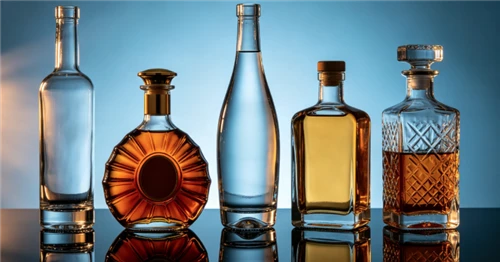
Spirit is actually another term for distilled liquor, known as "strong liquor" due to its high alcohol content. The so-called distilled liquor refers to a high alcohol beverage made from grains or alternative starchy materials (such as potatoes, fruits, and molasses), using fermentation agents such as koji and yeast cultivated by microorganisms, and stored through processes such as steaming, saccharification, fermentation, and distillation. According to the popularity and the size of the consumer market, people conventionally consider brandy, whisky, Rum, Mezcal, Gin, Vodka, Chinese Baijiu and Sake as the eight major spirits in the world.
1. Brandy
The raw material for making brandy is grapes, and the most commonly used varieties include Ugni Blanc, as well as Colombard, Trebbiano, and Baco Blanc. Most wine producing countries also produce brandy, with the two most famous regions being Cognac and Armagnac from France. Brandy is aged in oak barrels, and different regions have different regulations on the aging time. Taking Yawenyi as an example, the symbols "VS/VSOP/Napoleon/XO" indicated on the wine label correspond to ages of 1-3 years, 4-9 years, 6-9 years, and 10-19 years, respectively. Famous cognac brands worldwide include Hennessy, Martell, Remy Martin, Hine, and Camus.
2. Whiskey
Whiskey is the most complex grain spirits to date, rumored to have been brewed by Irish monks as early as the 15th century. Nowadays, whisky is produced worldwide, with the most representative being Scotch whisky and Irish whisky. Whiskey from both regions can be brewed from malt or grains, and the flavor and style are influenced by the use of peat and oak barrels during the brewing process. Bourbon and Tennessee whiskies in the United States are also very famous. In addition to malt, Bourbon whiskies require at least 51% corn as the raw material for brewing. Canada is also an important producer, producing large quantities of soft and easy to drink whiskey using corn as raw material. Japanese whisky imitates the Scottish model, using malt and grains as raw materials for brewing, and has become a top tier Japanese whisky globally renowned. Famous whisky brands include Johnnie Walker, Jack Daniel's, and Chivas Regal.
3. Rum
Rum is produced from sugarcane (Sugar Cane) or molasses as raw materials and is the national liquor of Cuba. The birthplace and core production area of rum is the Caribbean region. The stories of adventurers during the Age of Discovery and the rough and unrestrained legends of pirates add a touch of mystery and masculinity to rum. From the perspective of production methods and styles, rum can be divided into three categories: white rum, golden rum, and dark rum. Bestselling rum brands include Bacardi, Tanduay, and Captain Morgan.
4. Tequila
Tequila is the national liquor of Mexico, and its brewing raw material is the rhizome of a special plant called agave, which is locally known as the heart of agave. Tequila grass looks a bit like a cactus, with roots and stems like a huge pineapple. It is juicy and rich in sugar, making it very suitable for fermentation and brewing. The concepts of agave and Tequila are often confused in China. In fact, there are many types of agave, and only tequila made from the roots and stems of Blue Agave can be called Tequila. According to different aging times, Tequila has five types: unaged white (Blanco), golden (Oro, also known as new wine (Joven)), slightly aged (Reposado) with no more than one year of aging, aged (Anejo) with at least one year of aging, and extra Anejo with at least three years of aging. Popular tequila brands include Don Julio, Jose Cuervo, and Tapatio.
5.GIn
Gin is made from spirits with an alcohol content of at least 96% and a series of plant spices flavored and brewed. Its base liquor can be made from raw materials such as sugar beets and grains, and the most important plant spice is juniper, which is also the iconic flavor of gin. In addition to juniper berries, gin is often accompanied by spices such as coriander seeds, tangerine peel, Angelica sinensis, and iris root. Common types of gin include London Gins, Distilled Gins, and the cheapest cold blended Gins. Among them, the brewing process of London Gins is the most meticulous and the style is the most typical. Common gin brands in the market include Gordon's, Tanqueray, and Beefeater.
6. Vodka
Vodka can be brewed from any fermentable agricultural product, commonly grains and molasses, and some vodka uses potatoes and grapes as raw materials. Poland and Russia are the origins of vodka and the core production areas of vodka throughout history. Nowadays, vodka is produced all over the world. This type of wine is colorless and transparent, with a very light taste concentration. Its purity gives it its inherent charm and makes it an ideal base for cocktails and various mixed liquors. Most vodka requires distillation to 96% alcohol content, but to some extent, gin is a type of vodka flavored with plant spices. Stolichnaya, Grey Goose, and Beluga Noble Russian are all famous vodka brands in Russia.
7. Chinese Baijiu
Baijiu takes wheat, rice, corn, sorghum, glutinous rice and other grains as the main raw materials, saccharification and fermentation under the effect of starter and yeast and other fermentation agents, cooking, saccharification, fermentation, distillation, also known as Shaojiu, Laobaigan, Shaodaozi, etc. Baijiu is usually transparent or slightly yellow, with pure fragrance, sweet and clean taste, and high alcohol content. Chinese Baijiu is mainly classified into five flavors: sauce, thick liquor, clear liquor, rice and chicken. Maotai liquor and Langjiu liquor are the representatives of Maotai liquor and Maotai liquor; Representatives of strong aroma types include Luzhou Laojiao Tequ, Wuliangye, Jiannanchun, Shuijingfang, etc; Fragrant type is common in the north, including Shanxi Fenjiu, Beijing Erguotou, Heng Shui Liquor, etc; The rice aroma type is mostly found in the south, with Guilin Sanhua liquor being the most typical; Fengxiang type is actually a combination of the raw materials of strong aroma liquor and the fermentation process of light aroma liquor, and Xifeng liquor from Shaanxi can be regarded as the best representative.
8. Japanese sake
Using the simplest ingredients of water, rice, and yeast, the Japanese continuously refined the process and brewed an unparalleled sake with a delicate taste. During the brewing process, people grind away impurities from the outer layer of the rice grains, thereby obtaining the "refined rice" for brewing. According to the degree of polished rice, sake can be divided into Daiginjo with a 50% polished rice degree, Ginjo with a 60% polished rice degree, Junmaishu with a 70% polished rice degree, and Honjouzon with a 70% polished rice degree. In addition, according to the brewing method, sake can also be classified into many categories such as raw wine, raw wine, and ancient wine. The management of Japanese liquor laws is quite strict. In addition to basic information such as alcohol content, raw materials, and bottling, some liquor labels also require more specific information such as the proportion of polished rice, rice variety, and place of origin to be indicated. Sake brands such as Baihe, Bailu, and Guiguan have been established for over hundreds of years and are very well-known.