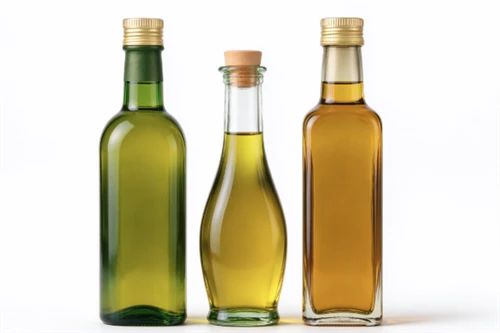
For the characteristics of the wine bottle, most wine lovers can say: the red wine bottle is green, the white wine bottle is transparent, the capacity is 750 ml, and the bottom has a groove.
First look at the color of the bottle. As early as the 17th century, the color of the wine bottle was green, which was limited by the bottle making process at that time. The bottle was made with many impurities, so the bottle appeared green. Later, it was discovered that the dark green bottle helps protect the wine in the bottle from the light and contributes to the ageing of the wine, so most wine bottles are made dark green. For white wines and rosé wines, they are usually placed in transparent wine bottles. It is hoped that the color of white wine and rosé wine will be presented to consumers, which can give people a more fresh feeling.
Secondly, the capacity of the bottle is composed of many factors. One of the reasons for this is still to start from the 17th century, when the bottle was made by hand and relied on the Glass-blower. Affected by the blower's lung capacity, the size of the wine bottle was between 600-800 ml. The second reason was the birth of a standard-sized oak barrel: the small oak barrels that were shipped at that time were established at 225 liters, so the EU set the capacity of the wine bottles to 750 ml in the 20th century, so that a small oak barrel could Filled with 300 bottles of wine, can hold 24 boxes. Another reason is that some people think that 750 ml can pour 15 cups of 50 ml of wine, which is suitable for a family.
Although most wine bottles are 750 ml, wine bottles of various capacities have now appeared.
Finally, there is a groove on the bottom of the bottle. This feature is often mythical. The deeper the groove, the higher the quality of the wine. In fact, the depth of the groove at the bottom is not necessarily related to the quality of the wine. Some bottles are designed with grooves to allow the sediment to collect around the bottle and to remove it when hangtling. With the advancement of modern winemaking techniques, wine slag can be directly filtered out during the brewing process, so no grooves are needed to remove the precipitate. In addition to this, the bottom has a groove to facilitate the storage of the wine. If the center of the bottom of the wine bottle is raised, the bottle is difficult to stabilize. However, with the improvement of the modern bottle making process, this problem has also been solved, so the groove at the bottom of the bottle is not necessarily related to the quality. Many wineries still keep the grooves in the bottom more to keep the tradition.