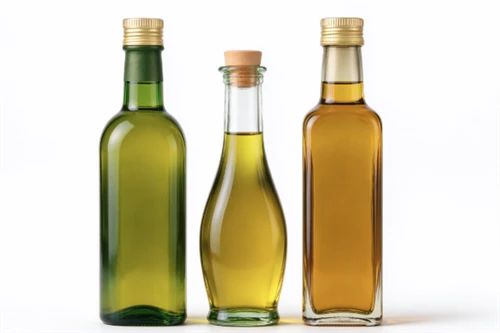
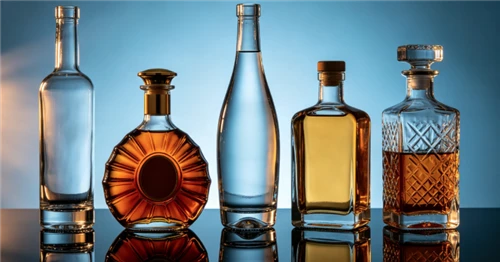
The original wine bottles were varied and there were no uniform standards and specifications. Until the owner of the winery realizes that the shape of the wine will have a certain impact on the quality of the wine. Only began to regulate the production of wine bottles,
Gradually evolved into several major bottle types today.
History of wine bottles
Regarding who invented the glass bottle, we are indisputable, but before creating the wine bottle, people have already made glass bottles to store medicines and the like. The earliest people put wine into glass bottles, just for the sake of beauty, they did not know the effect of the bottle on the quality of the wine. Later, the bottle process was improved, the fastness was increased, the bottle changed its appearance, and it was more for transportation. Later, people discovered the bottle's protection of the quality of the wine. Marine transport, the development of land transport, the prosperity of trade, and the germination of modern industry provide an opportunity basis for the manufacture and appearance of bottles.
The spread of bottle new technology production
-- 1670, this technology is popular in the Netherlands. -- 1709, started to be popular in France.
-- The first glass factory in France is in Arden (Champagne). Then by the end of the 18th century, it spread to the Rhineland region of Italy, the Piedmont region of Italy.
-- After the British improved the bottle process and made the bottle stronger, the first benefit was of course the British trading area, which included Porter and Bordeaux.
-- Until 1821, glass forming began using split molds. Only a large number of wine bottles of uniform size and size were produced. The bottle began to be changed from manual blow molding to semi-mechanization (the split mold: firstly made two pairs of wine bottles with the mold, and connected, this technology is still in use now. Just made a better improvement)
Wine bottle standard
Color: Wine bottles are generally made of glass, some of which are green, some are blue, and some are colorless and transparent.
Volume: The international standard bottle capacity is 750ml. In the global market, most of the products we see are international standard bottle types (ie 750ml), or multiples of 750ml: 375ml is a half bottle of wine, this size is also very common, especially in the restaurant, Half bottled wine is very popular. So, apart from the standard bottle type of 750 ml, do you know what other bottles are like?
Weight: It is said that the weight of the bottle varies according to the quality of the wine. The bottle for daily meal is about 400 grams, the average bottle of Bordeaux is 550 grams, and the wine of Bodhi is about 700 grams. This ratio is consistent in the world, because the heavier the bottle, the more it feels thicker and the more authoritative it is.
Type of wine bottle
Wine bottles generally include Bordeaux bottles, Burgundy bottles, Rhone bottles, champagne bottles, and Hawker bottles. Different bottles contain different styles of wine. Therefore, knowing the wine bottle can help us understand the wine more clearly.
The first category: Bordeaux bottle Bordeaux
I believe that everyone will not be unfamiliar with this wine bottle. The bottle is generally used in Bordeaux blends: because Bordeaux-type (Bordeaux) sediments must use sober bottles, the shoulders are wide, straight and high. The color is dark green (red wine) or light green (white wine). This bottle is nicknamed "Ingrid? Tioman" lngird Bergman.
The second category: Burgundy bottle Burgundy
The design of the Burgundy bottle is classic and elegant, the shoulders are more oblique, and the bottle is more generous, and it can be seen at a glance that it is different from the Bordeaux bottle. The color is mainly light green. This bottle is nicknamed "Marilyn Monroe".
Category III: Moselle & Alsace Bottles Mosel & Alsace
This is a tall, slender, slender and lightweight bottle, usually in light green, mainly used in the wines of the German Moselle and Alsace regions of France.
The fourth category: champagne bottles
Compared with the previous popular wine bottles, the appearance of the champagne bottle is more prominent: the olive green glass color, the shoulder slope is gentle, the special large bottle design, and one third will stand out from the bottle. Since it is called a champagne bottle, this bottle is of course mainly used for champagne in the French Champagne region.
Category 5: Provencal bottles Côtes de Provence
This bottle is mainly used for rosé wine, the glass of the bottle is transparent, and the center of the bottle is thinned into a bee-waist shape, which is more like a bowling ball. Provencal bottles have been popular for decades and are not uncommon on the market.